Building a scalable data foundation for real-time operational intelligence
Executive Summary
Why operational intelligence starts with the data foundation
Manufacturers are under constant pressure to improve production continuity, increase throughput, maintain consistent quality and reduce operating costs. Yet these goals are often pursued through fragmented systems, isolated data pipelines, inconsistent KPIs, and manual decision-making processes that do not scale across sites and functions.
The challenge is not a lack of data. Most manufacturers already generate vast amounts of information across machines, control systems, MES, historians, quality platforms, maintenance systems and enterprise applications. The problem is that this data is rarely connected, contextualized, analyzed and operationalized through one coherent architecture. This limits the ability to create trusted dashboards, standardize performance metrics, detect emerging operational issues, compare performance across sites and support timely decision-making.
This whitepaper presents a four-stage approach for building a scalable data foundation for real-time operational intelligence:
Connect: makes operational data available in real time.
Contextualize: makes it understandable, governed, and trustworthy.
Analyze: turns it into actionable information.
Act: enables trusted systems and people to respond safely and consistently.
Together, these stages create immediate value for real-time visibility, standardized KPIs, operational analytics, quality monitoring and decision support across the enterprise. They also establish the event-driven and semantic foundation required when the organization is ready to delegate selected, clearly governed tasks to AI agents.
The objective is to help you build an architecture that improves operational performance today, through operational visibility and data-driven optimization, while creating a controlled path toward more intelligent and agentic industrial operations over time.
Chapters
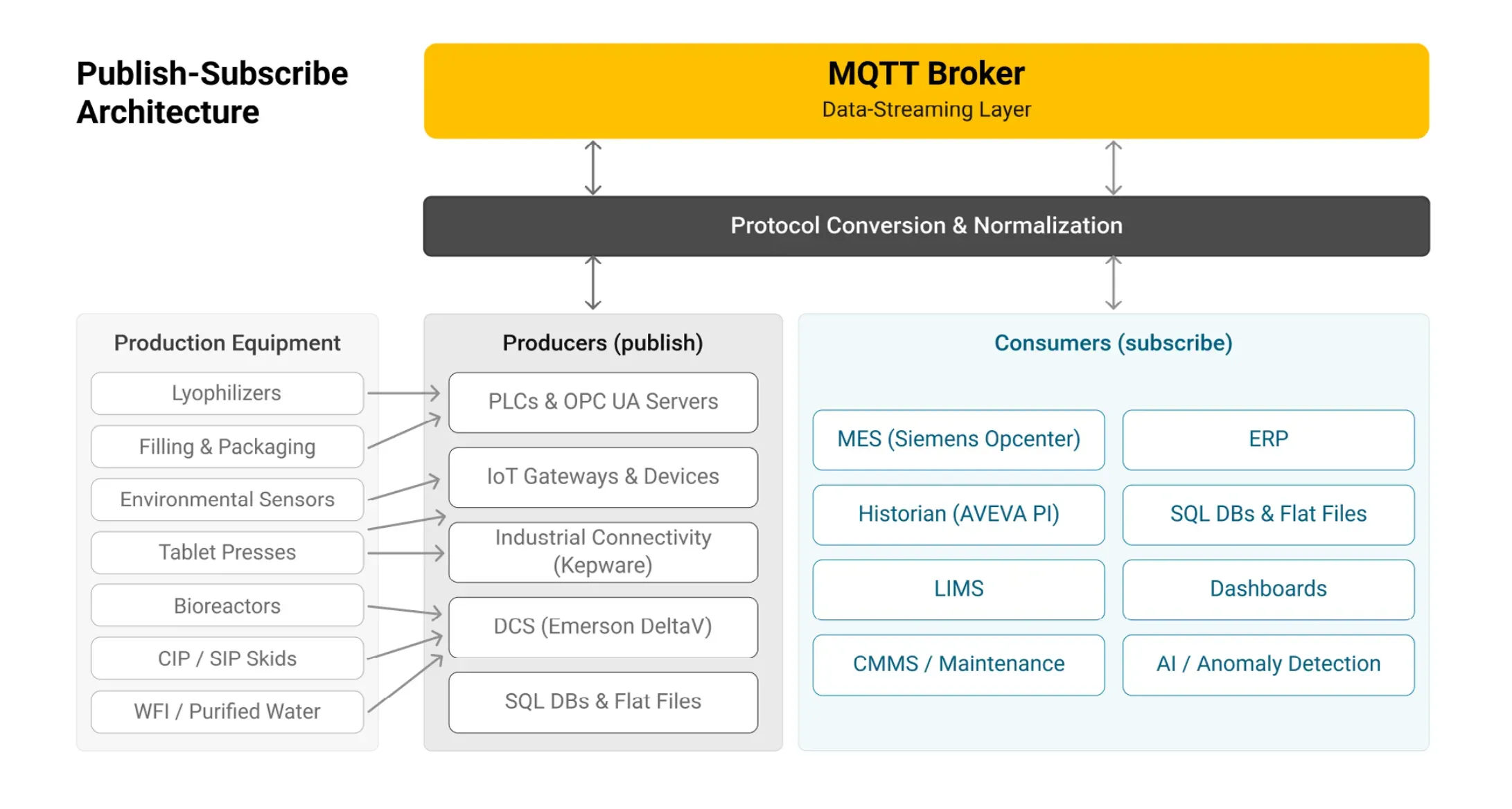
Connect: Building a real-time data backbone for data accessibility
What's inside: How to onboard machines, applications, databases and industrial systems into a common MQTT-based data-streaming backbone, moving beyond point-to-point integration, translating industrial protocols, designing for events and enterprise scale, and building in security and governance so successful use cases scale across the enterprise.
Contextualize: Turning data into understandable operational information
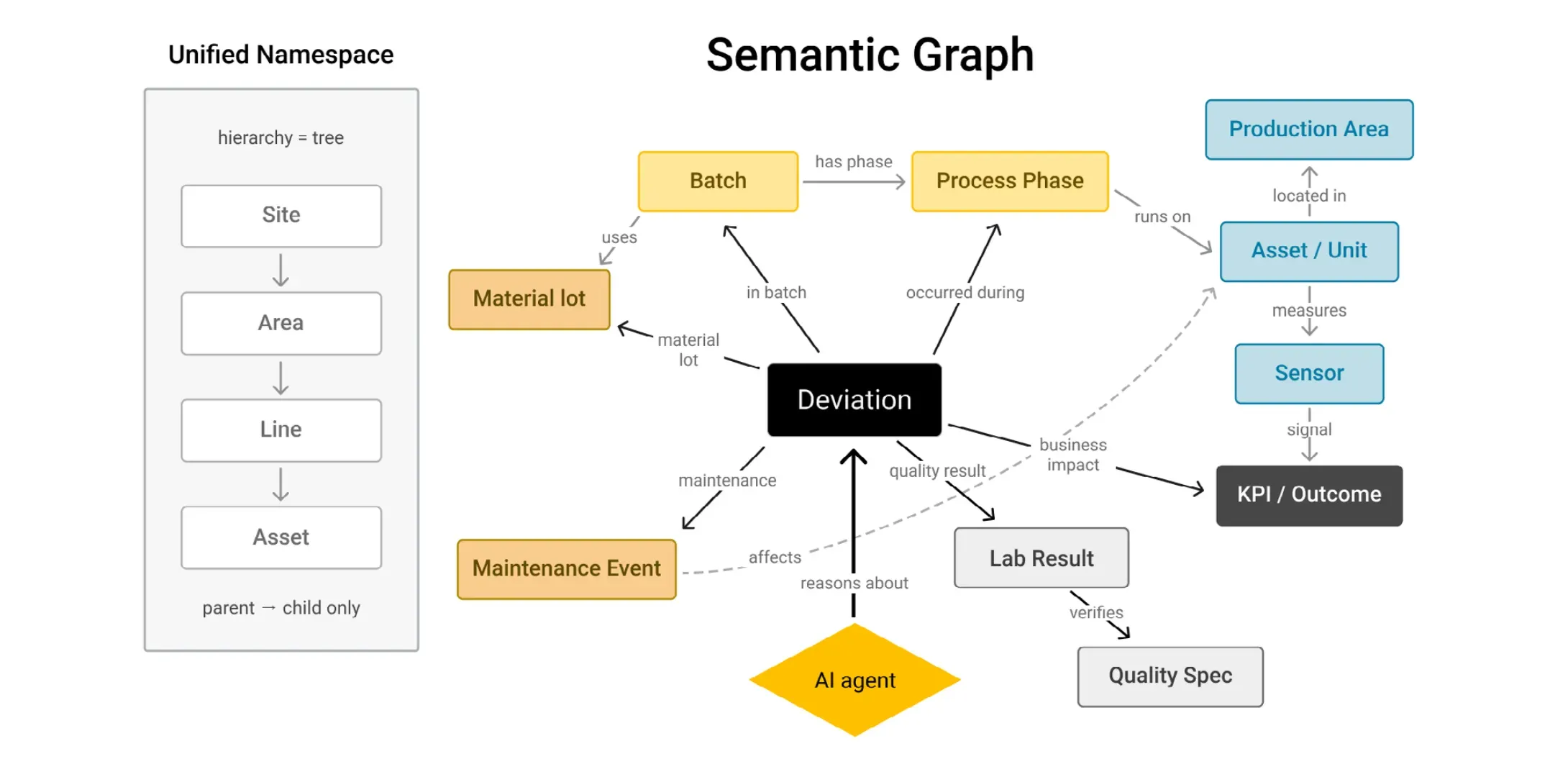
What's inside: How to turn raw, connected data into governed, trustworthy operational information using a Unified Namespace and a semantic graph, built on a semantic data layer of controlled vocabulary, ontologies and a knowledge graph, plus in-motion validation, metadata and lineage, and change governance.
Analyze: Turning contextualized data into actionable real-time intelligence
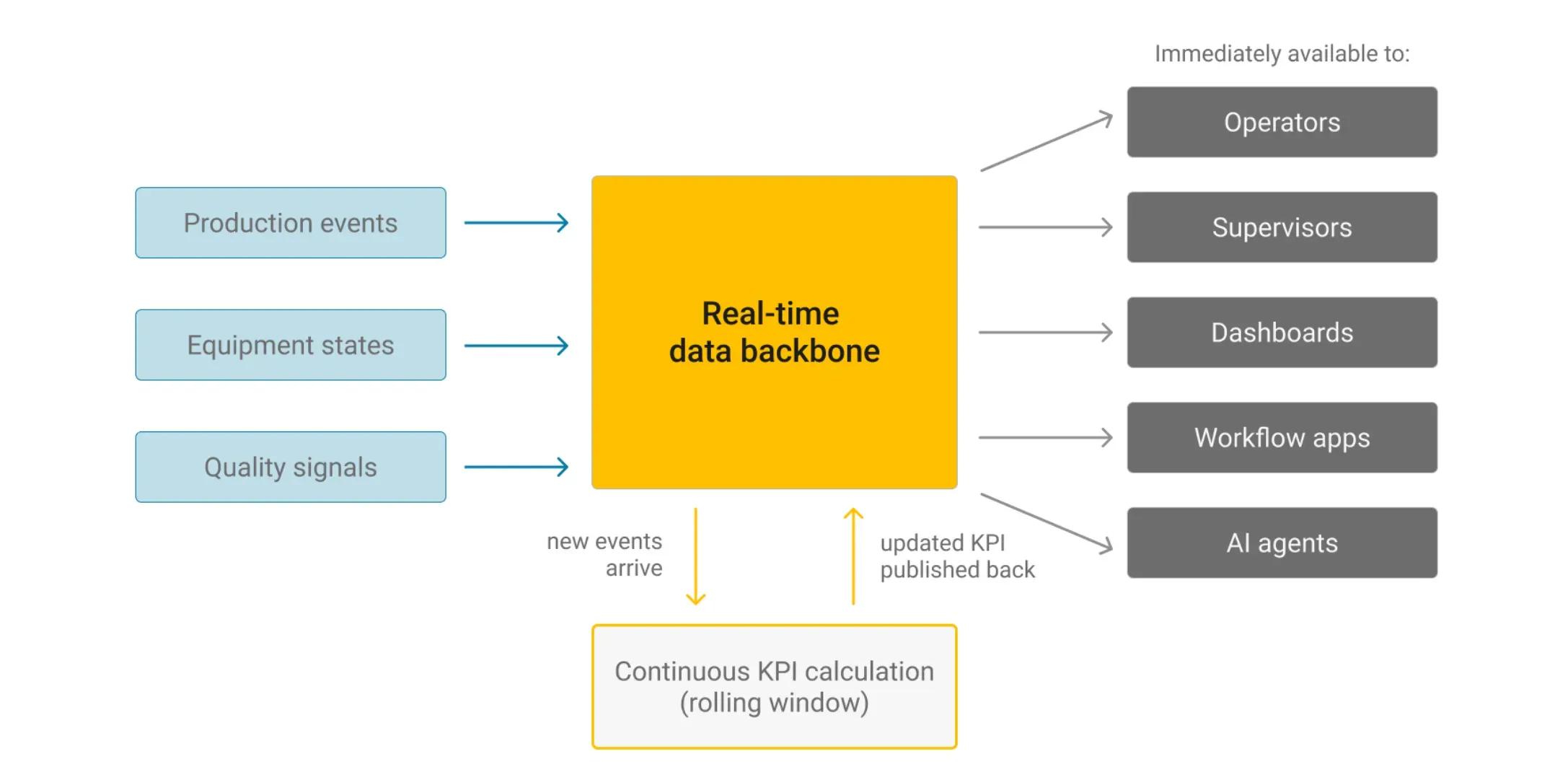
What's inside: How to build a continuous analytical layer that standardizes KPI definitions, runs reusable calculation services, detects patterns beyond simple thresholds, preserves evidence and explainability, and publishes insights back into the backbone so people, applications and AI agents share the same intelligence.
Act: How to operationalize data for governed agentic AI-driven action
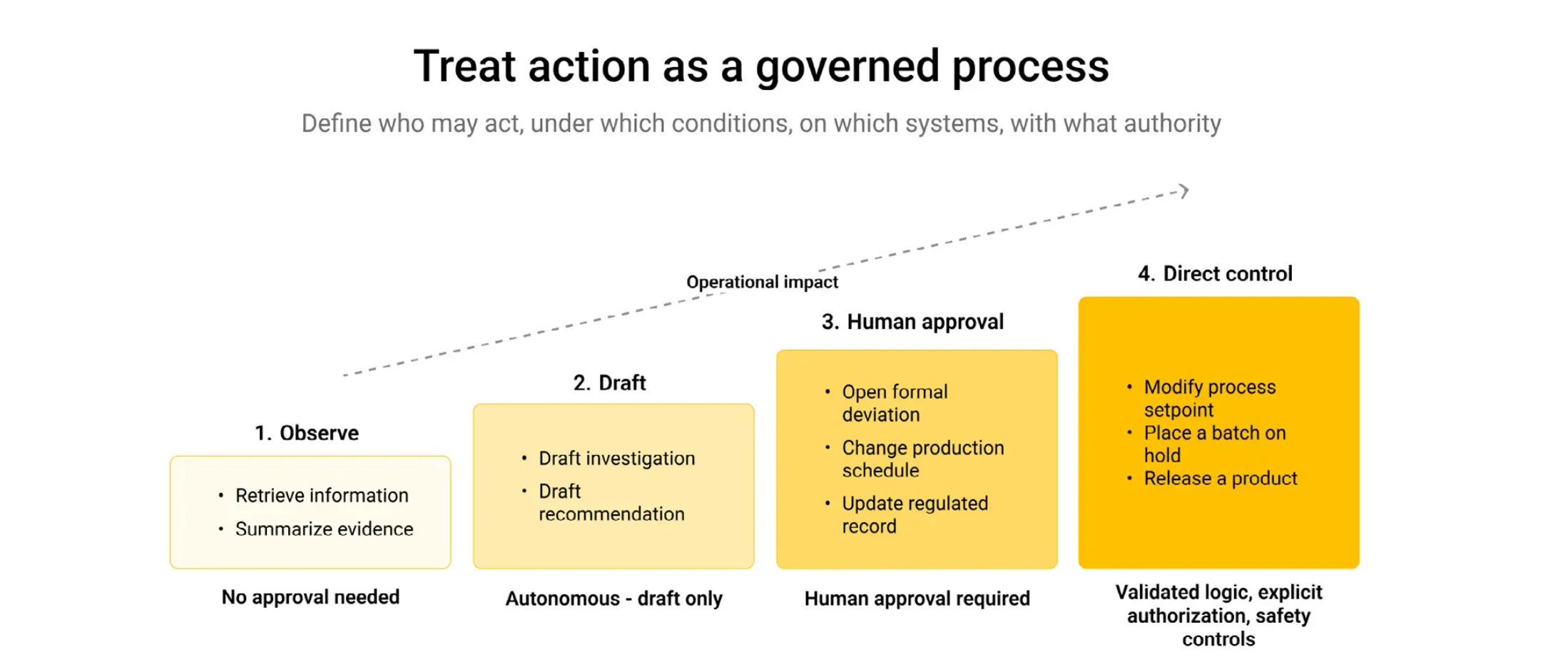
What's inside: How to create a governed action layer, defining agent roles and escalating action levels, triggering agents from trusted operational events, using the semantic graph for reasoning, requiring human approval where judgment and accountability matter, and preserving a complete audit trail with closed-loop outcome verification.
Conclusion: A coherent path from raw signals to trusted action
Why the four-stage approach is an operating model rather than a one-time project, so you don't need an agentic AI strategy to benefit today, but the manufacturers who build this foundation now won't need to retrofit trust into their architecture later, once they're ready to delegate real decisions to an AI agent.
Get the full white paper
See the complete Connect, Contextualize, Analyze, Act architecture, with the implementation patterns manufacturers use to turn fragmented data into real-time operational intelligence.